

I. Core Definitions
Wheels (commonly known as wheels) are the ring components of the outer ring of the wheel in direct contact with the tire, responsible for fixing and supporting the tire; the hub (also known as the wheel) is the central metal part connecting the axle and the wheel, bearing the power transmission and load support.
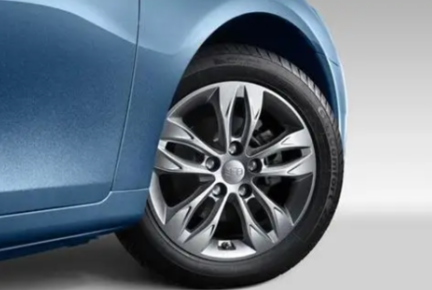
Differences in location and structure
Wheel rim: radial structure around the outer periphery of the wheel with shoulder convex edges (tilt angle about 46 °), deep groove on the inside for easy disassembly of the tire
Wheel: cylindrical body located in the center of the wheel rim, connected to the axle by bearing, surface connection to the wheel radius or other forming structure
Comparison of Functional Characteristics
🔧 Wheel core role
Provide a base platform for tyre installation
Maintain tyre pressure stability
Resistance to lateral force of tyre transmission
⚙️ The core role of the wheel
Carrying Weight
Transmission of driving force/braking torque
Impact on brake cooling efficiency
IV. Materials and processes
| Components | Mainstream Materials | Common Processes | Maintenance Points |
| Wheel rims | Steel / Aluminum alloy | Deep groove / Flat bottom / Open design | Check contact surface corrosion deformation |
| Wheels | Aluminum Alloy | Painting/Plating/Forging | Focus on bearing lubrication and bolt fastening |
V. Type segmentation
Wheel type: paint wheel (economical), electroplating wheel (high color value)
Wheel type: Deep groove wheel (commonly used in cars), flat bottom wheel (light card adapted), open wheel (heavy vehicles)
